I’ve been blown away by the incredible infrastructure in Colombia, and the remarkable speed at which stuff is built. This is most evident in Medellin: a city which, 30 years ago, saw over 6,000 murders a year, but is now a thriving, cosmopolitan metropolis.
Take a look at the city’s metro map:
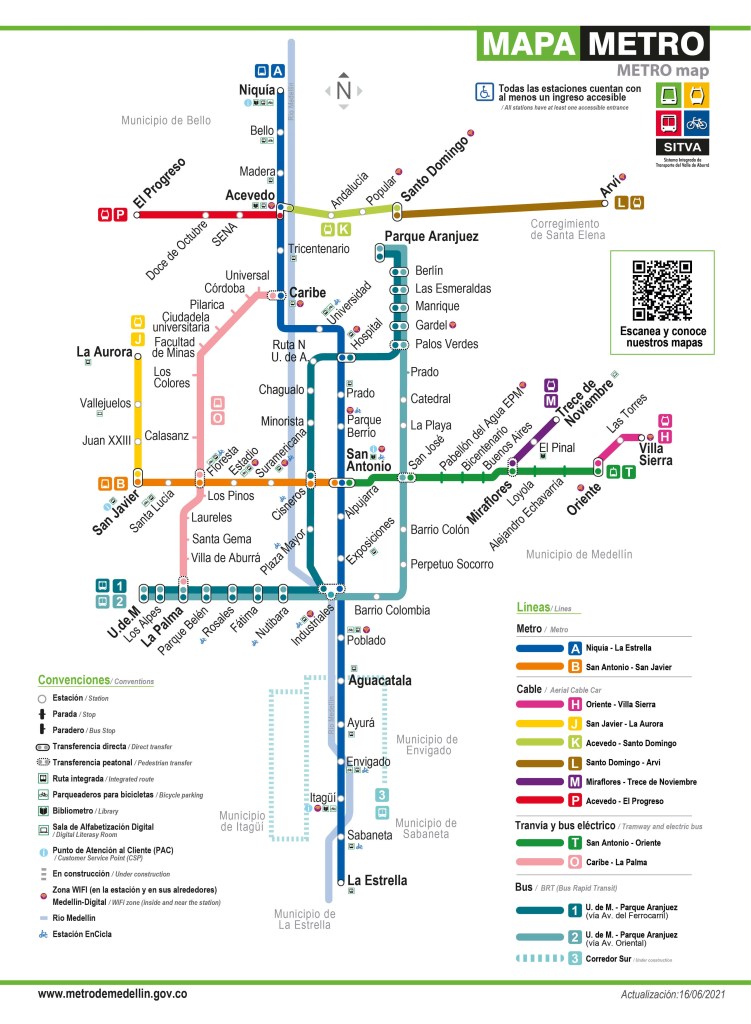
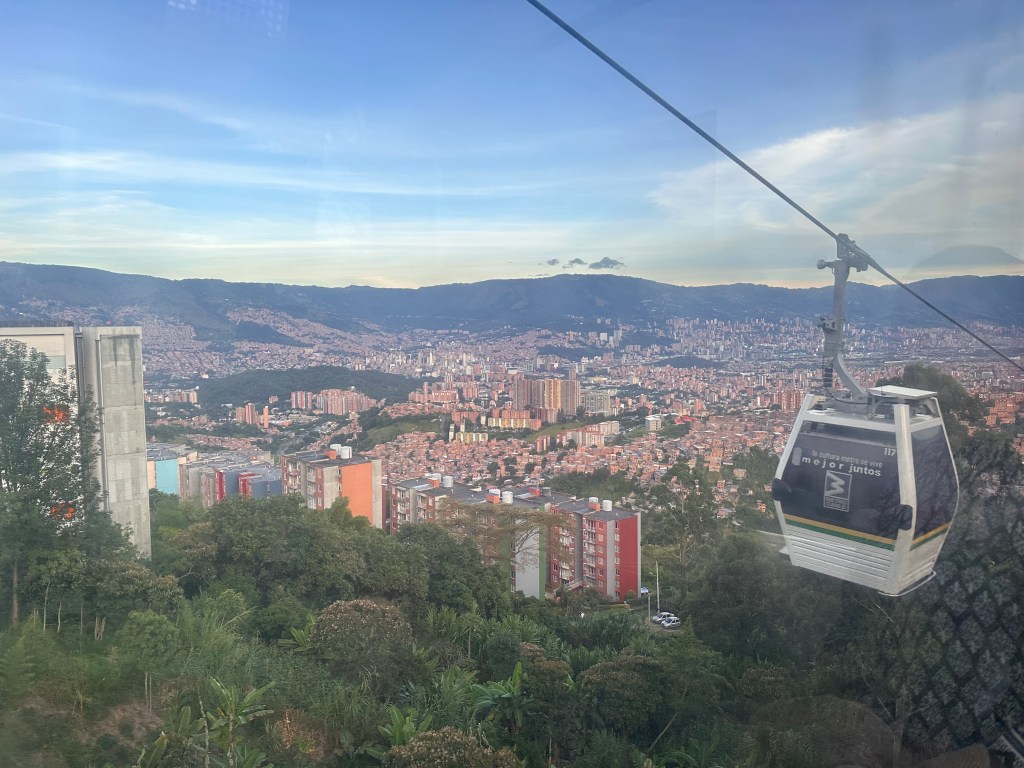
Along with two metro lines, trams and rapid bus transit, Medellin has an extensive network of cable cars. The first line (which cost just $26m) opened in 2004, with five more lines added since. Riding the cable car is incredibly cheap (about $0.70 per journey) — so it’s become incredibly popular with locals. Around 16 million people now ride it each year.
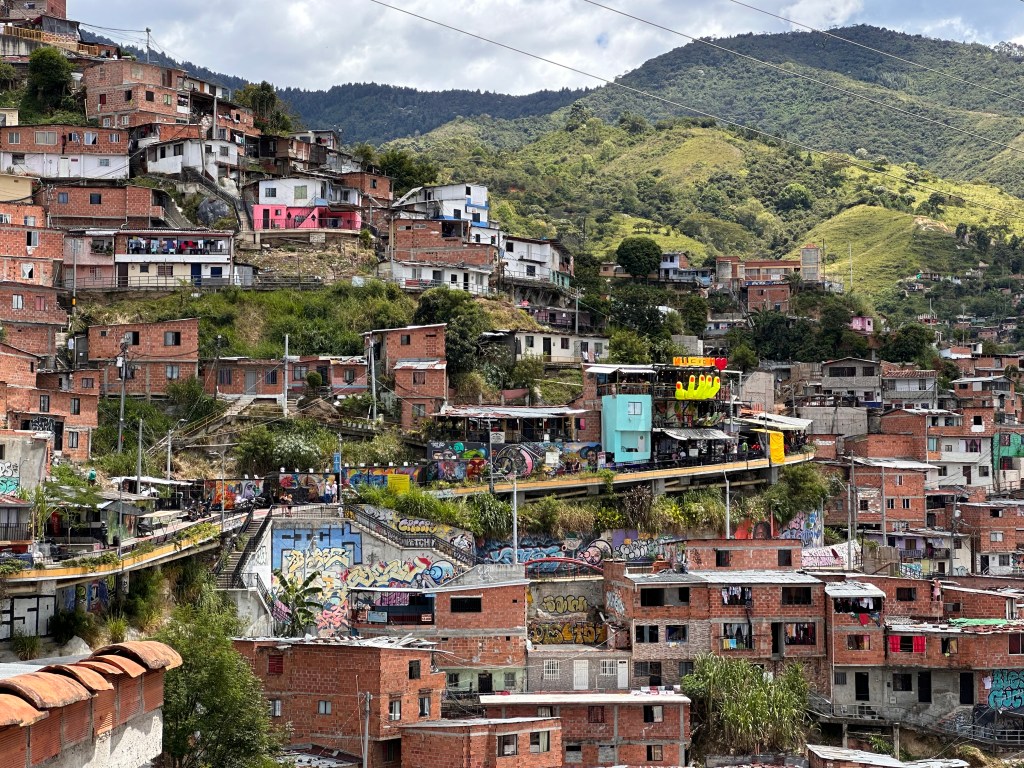
Then there’s Comuna 13, once one of the most dangerous neighbourhoods in the world. Perched on a steep mountain slope, getting around the comuna used to be a nightmare. But in 2011, a series of outdoor escalators opened — at a cost of just $7m. Not only have they helped residents, they’ve also turned the neighbourhood into one of Colombia’s most popular tourist destinations. The sides of the escalators are now lined with bars, shops and art galleries.
The government is continuing to invest, too. In the past few years a gigantic viaduct has begun to open, creating a motorcycle route that connects various hillside neighbourhoods (including Comuna 13). According to our tour guide, this might end up being even more important than the escalators.
It’s not all about public transport, either. Take the Túnel de Oriente, a 5.1 mile tunnel that connects central Medellin to the airport. The tunnel, which has halved travel time, was built in just 4 years at a cost of ~$270m. The increased ease of access to the city is encouraging people to move out of central Medellin, turning nearby towns into part of the metropolitan area. Work has already begun on expanding the tunnel’s capacity, which should cut another 35% off travel time — meaning airport journeys will soon be just 30 minutes; down from about 90 minutes just a few years ago. There’s just one downside: though the tunnel is currently the second-longest in the Americas (second to another Colombian tunnel), it’s about to be bumped down to third … by yet another Colombian tunnel.
These are just the projects I encountered in a three day visit to the city — I’m sure there are dozens more I don’t know about. And all this has happened so cheaply, and so quickly. It’s hard not to draw comparisons to London (where the Elizabeth Line cost £19bn and took 13 years) or New York (where a new subway line is taking between 30 and 100 years, depending on how you count, at a cost of around $17 billion).
But even more than the impressive speed and efficiency, the most impressive part of Medellin’s infrastructure is the transformative effect it’s had. Riding the gleaming metro, it’s genuinely hard to picture that a few years ago it was completely unsafe to be here. Better infrastructure has clearly made Medellin a safer city. The data backs this up, too: one study found that the decline in homicide rates was 66% greater in neighbourhoods that got transit investment than those that didn’t.
It’s a humongous success story — and one the rest of the world could do well to learn from.
 Essayant