I spent a few weeks in India last month; here are some thoughts and tips. Huge thanks to Sam Mendelsohn for his extensive tips and recommendations; if you’re going to India anytime soon his blog is an absolute must.
Specific details on each city below, but some general observations first:
I enjoyed this trip, but I enjoyed it less than my other two trips to India (Golden Triangle and Mumbai). I think some of that is that India is increasingly less novel to me, but I also think the south (at least these parts of it) is just less interesting to me than the north. (I have the obvious bias here of being ancestrally from North India, though.)
I was a little apprehensive about visiting during monsoon season, but it was totally fine. Some showers — especially in Bekal, where we ended up — but they’re generally over very quickly. The heat and humidity was a bit of a problem, especially in Hampi and Bekal, but it was never oppressively bad (and certainly better than it would have been in April/May).
The food down here is really good. I’ve never been a particularly big fan of dosas when I’ve had them in the UK; but in India they were excellent. Lots of things I’d never tried before, too (e.g. coconut chutney); almost all were great. It’s underrated just how different the food is from the north (though you can still get excellent northern dishes, too).
Bangalore
I was pretty surprised by Bangalore — it felt much more different to Delhi and Mumbai than I expected. I can’t quite put my finger on why: some of it is the greenery, but I think mostly it was the wealth that surprised me. Indiranagar and Church Street, in particular, felt very not-Indian; instead closer to something like Jordan or even the UK. The tech money is very visceral, though it also makes the city less interesting to visit, IMO.
Speaking of Church Street, I really enjoyed Blossom Book House, a chaotic labyrinth with a phenomenal selection. I would never have expected to find one of the world’s very best bookshops in Bangalore, but this is absolutely up there with The Strand, Daunt, Mast etc. as one of my favourites, anywhere.
The Museum of Art and Photography, a relatively new place, was very good, and features some of the best use of augmented reality I’ve seen in any museum, anywhere. Having Bloomberg Connects codes on every single exhibit was really impressive.
The flower market was my other highlight, much more expansive and active than I expected. It’s also a very interesting insight into what an economy with very low wages gets you: an astonishing number of people worked there, hand-threading garlands that are then sold by the metre and discarded after a few days. The surrounding ‘normal’ market wasn’t particularly interesting, though, and much worse than e.g. Chandi Chowk.
Karavalli was an exceptional restaurant, and though expensive by Indian standards it’s still cheap. Tons of hyper-regional stuff I’d never tried before (and expect I will never try again); the bebinka desert was particularly excellent. It’s a shame that they don’t do any sort of tasting menu though (and I did ask if they could) — I would have liked to try much more than we did. If you can go with a group, that’s obviously preferable, though there was a solo diner at the table next to us who seemed to be having a great time.
I was pretty underwhelmed by the Botanical Gardens, though we went in-between flower shows, which probably didn’t help. Worth visiting the area though so you can have lunch at MTR, which was a fun (and tasty) experience.
We stayed at the Adarsh Hamilton Hotel, which was great for the price (good location, decent breakfast). Then we flew from Bangalore to Vidyanagar (cheap and easy) and got a taxi from there to Hampi/Hospet (also cheap and easy; we didn’t have to prebook).
Hampi
Hampi is an interesting place, and I think it’s worth visiting, though I couldn’t help negatively comparing it to the sites of the north. It’s all good and impressive, but it’s samey and there weren’t many things that truly blew me away (in the way that e.g. the doorways in Jaipur’s City Palace or the marble windows in Fatehpur Sikri did). It’s not a slam-dunk must-visit, but if you’re nearish and interested in history, you’ll probably enjoy it. Perhaps the best reason for going is that it’ll force you to learn about the Vijayanagara Empire, which I’d never heard of but was once very important!
We stayed in Hosapete, which was fine; our hotel (Malligi Hotel) was nice enough and had two restaurants, which saved us bothering to go out in the evening. We did go to Naivedyam for lunch one day, which was pretty good.
I mostly followed Sam Mendelohn’s suggested itinerary, which worked well. On both days we hired an auto for the whole day; this was well worth it. My number one recommendation is probably to get the book Hampi Vijayanagara by John M Fritz and George Michell. Bring it with you (or get it on your phone) and read the relevant sections as you’re in each place. Much more useful and interesting than the guides, who don’t actually know very much (but are useful for photoshoots).
Day 1: Auto to the far end of Hampi Bazaar. Walk along the river, end up at Vittala Temple (which is pretty and expansive). Looped back round, saw the Achyutaraya Temple (which was empty aside from us) and the big nandi. Then we met our driver, who took us across the bazaar to the Virupaksha Temple (full of monkeys, and the stepwell behind it is pretty). By this point it was around lunchtime and we were tired, so we went back to the hotel to rest. That evening, our auto driver collected us again and took us to the Malyavanta Raghunatha Temple for sunset. We didn’t actually get to see the sunset because a jobsworth guard kicked everyone off the viewing point before the sun set, but the views were still nice and the temple is peaceful with lots of very fun monkeys to observe.
Day 2: We focused on the “royal enclosure“. We didn’t really control our itinerary here, our driver just took us from point to point — which was actually quite nice for reducing the cognitive burden of planning. I preferred this part of Hampi; the Islamic influence improves the architecture quite a lot. I enjoyed the Queen’s Baths, the stepwell, the “secret” passage, the Hazara Rama Temple, and the very ornate Lotus Mahal. Also really liked the massiveNarasimha and Kadalekalu Ganesha monoliths. We also went to the museum, which was fine but not particularly good. After all that, we were pretty exhausted, so we just called it a day.
From Hosapete, we then took a sleeper train to Mysore. We booked two berths in a 1A carriage, which was obviously the right decision. We had to share our cabin with two other people, but they were a very nice and polite middle-aged couple who didn’t make any noise, so it was totally fine. The toilets were clean, and the whole journey was much more comfortable than the last Indian sleeper train I took — at least part of which is probably down to taking the unbeatable combo of melatonin and diphenhydramine just as I boarded. I highly recommend sleeper trains; it makes the best use of your limited travel time and saves you a night’s accomodation, too.
Mysore
This is a really lovely city: just the right amount of chaotic while still feeling very liveable, and with plenty to see and do. Mysore Palace is supposedly the highlight, but I was somewhat underwhelmed: it’s pretty, don’t get me wrong, but the visiting experience is a bit like being shepherded through a Disneyland queue. I couldn’t find anywhere to hire a guide, which I think detracted from the experience a lot. We went back to see the palace and gardens lit up at night; that was pretty and the live music was fun. Nearby is the Jagan Mohan Palace art gallery: the ground floor is excellent; the rest is skippable IMO.
Instead, my highlight was Tipu Sultan’s Summer Palace in nearby Srirangapatna (you can book a taxi there, though we had to book a round-trip). This place is stunning — pictures don’t do it justice — and probably my highlight of the whole trip. The decoration is absurdly intricate and well-preserved, with an absolute ton packed into a really tiny space. The paintings mocking the British are particularly excellent. The nearby Gumbaz, where Tipu is buried, is also great. I think all of this was enhanced by reading Tania James’ Loot, a beautifully written novel about Tipu’s Tiger and colonialism, while in Mysore.
Two other unexpected highlights were the Sand Sculpture Museum and the Shell Museum, both conveniently near our hotel (the Windflower, which was lovely). Each is dedicated to a different, slightly mad, artist who has decided to pursue a niche craft to excellence: sand sculptures and shell sculptures respectively. The actual art in each isn’t exactly brilliant; it’s certainly not going to emotionally move you. But it is all incredibly impressive, and as testaments to the power of pursuing your passions they’re both really inspiring (as cheesy as that sounds). They’re across the road from each other and cost next-to-nothing to visit; you should go.
Shopping-wise, I was glad to get a selection of Mysore Pak from Guru Sweet Mart, though it’s very sweet, and the Cauvery Government Store has some cool stuff (though it’s very expensive and the checkout process is idiotically convoluted). As for food, I am eternally grateful to Sam for his recommendation of the Old Original Hotel Vinayaka Mylari, which has just moved into larger and fancier new premises. The Mylari dosa here is incredible and, at 55 rupees per dosa (with coconut chutney), possibly the best value food I’ve ever had. There is no menu or bill, they just tally up how many dosas you’ve had at the end and cross-reference it against this excellent wall-chart:
Bekal
There is not much to say about Bekal as we very intentionally did absolutely nothing while there. The drive from Mysore to Bekal, through the mountains and rainforests, was very fun (though at times a bit terrifying). We stayed at the Taj Bekal, which is a beautiful hotel with excellent (expensive) food, but iffy service. A great place to read your book in a pool, though, which is the best activity anyone could ever ask for.
I was underwhelmed by almost all the food on this visit. Thanh Long’s garlic noodles aren’t as special as one is led to believe (and certainly not worth the price); Rose Pizzeria is fine but doesn’t hold a candle to basically any pizzeria in NYC or Chicago; La Taqueria and Hang Ah Tea Room are both fine but nothing special; and Tartine’s cakes are actively disappointing. At normal prices this would all have been tolerable; at SF prices it feels like robbery.
I thought Escape from NY, Woodhouse Fish Co. and Las Cabanas were all decent and not ridiculously priced, though.
The big exception to this is the superb Arsicault. My friend described their pain au chocolat to me as the most delicious thing he’s ever eaten; it’s hard to disagree with that assessment. The croissants are superb, too.
I’ve been to SF MOMA before, but enjoyed it even more this time round. The Visitors is particularly special — I went in expecting to stay for 5 minutes, and ended up remaining for over an hour.
Berkeley has some really excellent book shops. Half-Price Books has, as the name implies, very good prices (especially by American standards), while Moe’s has an exceptional selection of second-hand film books (an oddly small history of technology section for the region, though).
Golden Gate Park is absolutely stunning. Smells great, too.
If only the same could be said for Market Street, which is still an absolute disaster.
Waymo taxis, now omnipresent in the city, are very obviously the future. A faultless journey, aside from the end: it dropped me off down an alleyway next to someone high on fentanyl, which sounds so absurd I’m sure you think I made it up.
The De Young is a pretty middling museum (certainly not worth the admission fee), and it ought to be criminal to own a Turrell Skyspace but not allow access at sunset.
The Musée Mecanique, on the other hand, is an absolute delight — an obvious labour of love, and a fascinating one at that. Cheap, too!
It continues to be very odd that a broadly quite average city (at least in terms of museums, food, theatre, transport) is the most important place on earth.
It’s probably got the highest average quality of food of anywhere I’ve been in Europe. Every meal I had was good; several were very good; and I felt very confident walking off the street into anywhere. It’s all incredibly cheap, too.
The Catholic architecture is incredibly mediocre. The cathedral in particular is a disaster: a terrible layout, horribly gaudy chapels and altarpieces, and a total lack of aesthetic harmony. Cordoba’s mesquita is another example; the Catholics ruined what was probably once a gorgeous building.
But the Islamic architecture is stunning; some of the best in the world. Importantly, this remained the case even post-Reconquista: my personal interpretation of the Mudéjar era is that it seems even the Catholics realised Muslim craftsmen and designers were much more talented than them.
The synagogue in Cordoba is very beautiful and very moving, too.
The Three Kings parade had much more blackface than I expected — dozens, probably over a hundred, people. It’s disgraceful and embarrassing, and a good reminder of how intolerant much of mainland Europe still is.
It’s a lovely city to wander around, if a little small. The narrow streets are atmospheric, and in orange season it’s really beautiful. Great landscaping, too (thanks to the Moors, of course).
It’s surprising, and a little confusing, how bad Renaissance/Golden Age era Spanish art was. De Vargas, Vazquez, Pacheco, Velasquez, Murillo — all their works felt flat and lifeless to me, and the Museo de Bellas Artes didn’t contain a single piece that moved me. Considering these painters came after da Vinci, Caravaggio, Raphael etc., it’s particularly odd.
I’ve been blown away by the incredible infrastructure in Colombia, and the remarkable speed at which stuff is built. This is most evident in Medellin: a city which, 30 years ago, saw over 6,000 murders a year, but is now a thriving, cosmopolitan metropolis.
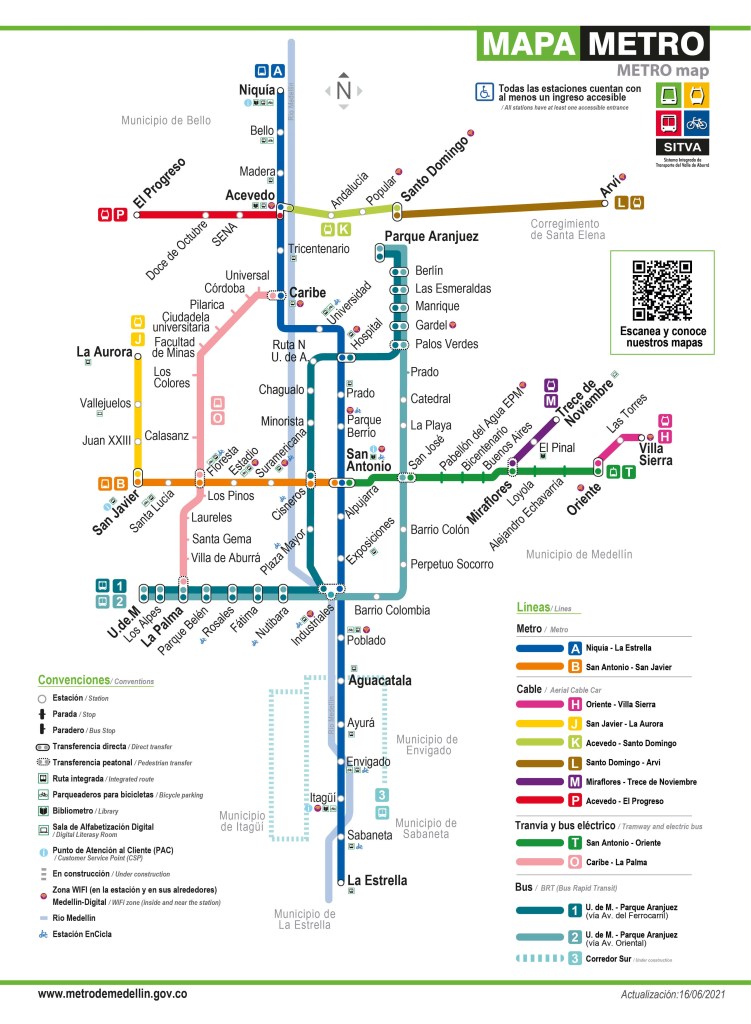
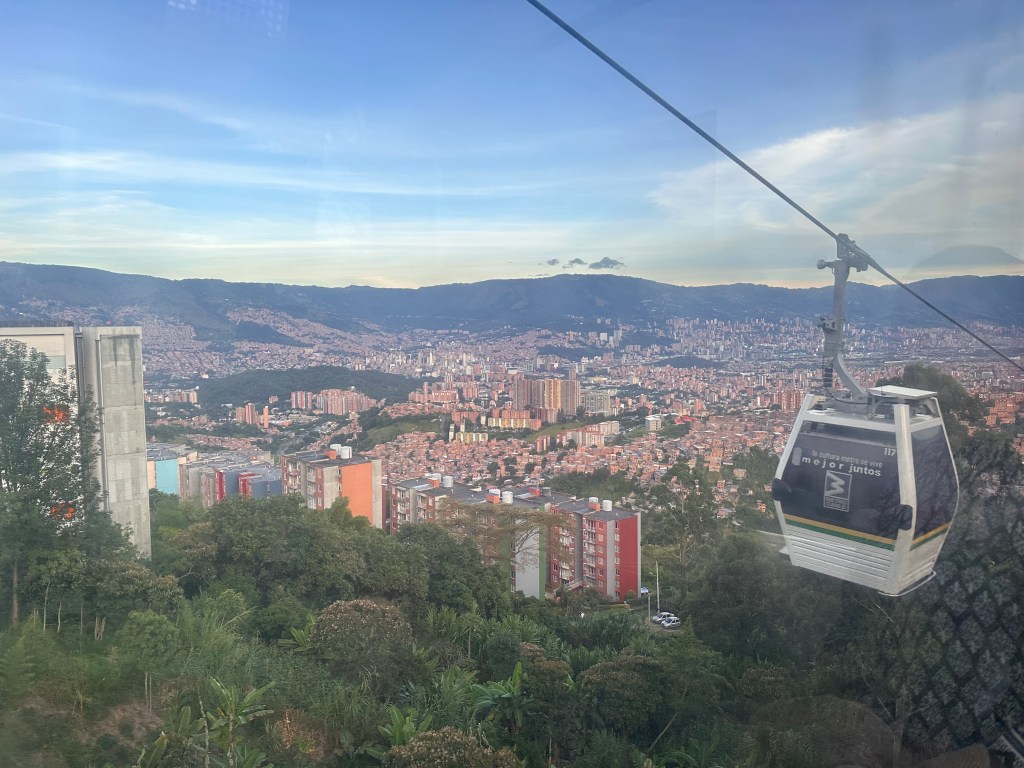
Along with two metro lines, trams and rapid bus transit, Medellin has an extensive network of cable cars. The first line (which cost just $26m) opened in 2004, with five more lines added since. Riding the cable car is incredibly cheap (about $0.70 per journey) — so it’s become incredibly popular with locals. Around 16 million people now ride it each year.
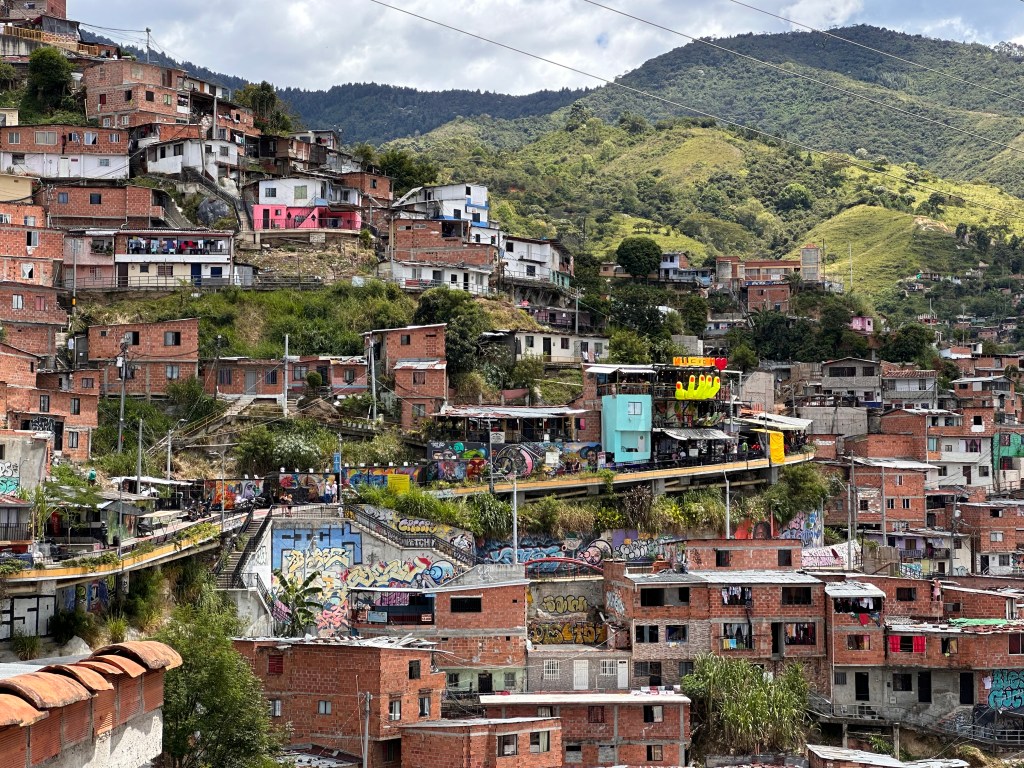
Then there’s Comuna 13, once one of the most dangerous neighbourhoods in the world. Perched on a steep mountain slope, getting around the comuna used to be a nightmare. But in 2011, a series of outdoor escalators opened — at a cost of just $7m. Not only have they helped residents, they’ve also turned the neighbourhood into one of Colombia’s most popular tourist destinations. The sides of the escalators are now lined with bars, shops and art galleries.
The government is continuing to invest, too. In the past few years a gigantic viaduct has begun to open, creating a motorcycle route that connects various hillside neighbourhoods (including Comuna 13). According to our tour guide, this might end up being even more important than the escalators.
It’s not all about public transport, either. Take the Túnel de Oriente, a 5.1 mile tunnel that connects central Medellin to the airport. The tunnel, which has halved travel time, was built in just 4 years at a cost of ~$270m. The increased ease of access to the city is encouraging people to move out of central Medellin, turning nearby towns into part of the metropolitan area. Work has already begun on expanding the tunnel’s capacity, which should cut another 35% off travel time — meaning airport journeys will soon be just 30 minutes; down from about 90 minutes just a few years ago. There’s just one downside: though the tunnel is currently the second-longest in the Americas (second to another Colombian tunnel), it’s about to be bumped down to third … by yet another Colombian tunnel.
These are just the projects I encountered in a three day visit to the city — I’m sure there are dozens more I don’t know about. And all this has happened so cheaply, and so quickly. It’s hard not to draw comparisons to London (where the Elizabeth Line cost £19bn and took 13 years) or New York (where a new subway line is taking between 30 and 100 years, depending on how you count, at a cost of around $17 billion).
But even more than the impressive speed and efficiency, the most impressive part of Medellin’s infrastructure is the transformative effect it’s had. Riding the gleaming metro, it’s genuinely hard to picture that a few years ago it was completely unsafe to be here. Better infrastructure has clearly made Medellin a safer city. The data backs this up, too: one study found that the decline in homicide rates was 66% greater in neighbourhoods that got transit investment than those that didn’t.
It’s a humongous success story — and one the rest of the world could do well to learn from.
I’d like to revisit: Tokyo, Japan; Grand Canyon, USA; Los Angeles, USA; Serengeti, Kenya; Maldives; Luxor, Egypt; Berlin, Germany.
Some of my favourite places: Chandni Chowk, India; Amazon Rainforest, Brazil; Parc des Buttes-Chaumont, France; Maldives; Kuzuko Lodge, South Africa; Volcanoes National Park, Rwanda; Angkor Wat, Cambodia; Hatshepsut Temple, Egypt; Tokyo, Japan; Hong Kong; Uluru, Australia; Great Barrier Reef, Australia; New York, USA; Istanbul, Turkey; Jerusalem, Israel; Skye, UK; London, UK.
Rome is a very good food city, but not a great food city. I went to many of the most highly recommended restaurants; they were all good but I think I will struggle to remember all but one a year from now.
(The one I will remember is Santo Palato, which was divine. L’Elementare and Felice a Testaccio were very good too. Cesare al Castelleto and Romanè were good but I didn’t really get the hype.)
This chimes with my experience of Venice and Lake Garda last year; the only meal I remember from then is Lido 94. Being in Italy is a good reminder of how invented some of the narratives about Italians and food are; much of what “everyone knows” is in fact just conservative nationalistic propaganda of the worst kind.
Taking things slowly is essential. Reports of overcrowding were (the week of Easter, at least), greatly exaggerated. Buy tickets online and in advance and you’ll be fine, even in the Vatican (which is unmissable).
Vasari’s The Lives of the Artists is worth reading anyway; it’s especially worth reading when in Rome (and presumably Florence). Rick Steves’ app is also very good (I preferred reading the transcripts to listening). Make sure to visit the various churches that house important works; Sant’Agostino is my favourite.
The public transport is surprisingly good, and much better than it gets credit for. The soon-to-open new metro line should make that even better.
Italians have a reputation for being very friendly but I find that in reality this is rarely the case.


 Essayant