-
Five restaurant recommendations for visitors to London
In a recent, excellent, Vittles post, Jonathan Nunn asked people for the top five places visitors to London should eat at. Here are mine, based around the criteria of getting things you can’t get elsewhere/understanding the “soul” of London:
St John, but just for starters and puddings (whoever says the food at Rochelle Canteen is better is wrong, I always leave the latter feeling ripped off). You could substitute this with F.K.A.B.A.M., which offers an insight into both Turkish and nose-to-tail cooking, but the food is less consistent and the atmosphere is less fun.
40 Maltby Street, for the other side of Modern-British-Cooking.
Dishoom: not for the food, which is awful, but because it gives you a better insight into how white people view British Asians than almost anything else.
Bake Street, which gives you a better insight into how brown people view being British Asian than almost anything else.
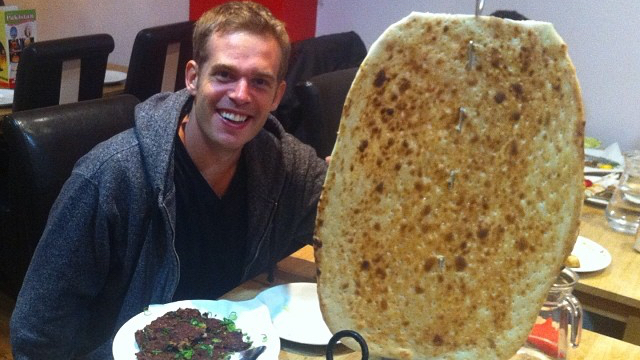
Taste of Pakistan on your way back to Heathrow. Pack leftovers for the plane and annoy everyone on your return flight.
-
Some good things, April 2022
Books
I have been very bad at finishing books this month, but I am enjoying Stuart Richie’s Science Fictions, which is both fascinating and terrifying; and Olga Tokarczuk’s Drive Your Plow Over the Bones of the Dead, which is beautifully written but so far lacks a compelling plot.
Films
The Worst Person in the World was excellent, though it hasn’t particularly stuck with me. The same is true for Ghost In The Shell, which I saw for the first time at the BFI IMAX (not really the best format for it, in hindsight). The best film I’ve seen recently was The Northman, which I think might have a better story than Hamlet (the two share the same Norse myths as inspiration). I saw that in a bad cinema (I always forget how awful Barbican Screen 1 is) and want to watch it again.
TV
There’s a lot of good stuff on at the moment. Severance is as excellent as everyone says, Winning Time and Atlanta both deserve more attention, and Better Call Saul is off to an incredible start. I’m also enjoying the very, very cute Old Enough.
Restaurants
Two set menu bargains stood out in the past month: the “Scratch” menu at Spring and the lunch menu at Noble Rot. The former is a meal worth many, many times the price; the latter is supremely comforting. Arcade Food Hall lived up to expectations, and I expect to become something of a regular. I am now unquestionably a regular at Jolene Colebrooke Row.
Theatre
I’ve been a Punchdrunk obsessive since I first saw The Drowned Man in 2014. The Burnt City doesn’t quite match its London predecessor, but is excellent nonetheless. I’ve already been twice and I expect to return many more times. I went to Jerusalem with similarly high hopes, having seen and loved a student production many years ago. It was, unsurprisingly, even better in the West End: Mark Rylance and Mackenzie Crook are phenomenal, the set’s great, and the whole show is beautifully crafted.
Music
I’ve been trying to get more into classical music, with varying degrees of success. I find the older stuff a lot harder, though Bach’s Goldberg Variations are impressive. The modern stuff is more up my street, especially Max Richter’s Recomposed Four Seasons, John Cage’s In a Landscape and Steve Reich’s Triple Quartet Duet. Mostly, I’m learning just how abysmal Spotify is for listening to classical music; Apple’s dedicated classical app can’t come soon enough. Elsewhere, I find myself coming back to Underworld’s Frankenstein soundtrack again and again.
-
13 musings from EA Global

- An awful lot of people are interested in effective altruism.
- A lot of people want to use journalism as a tool for magnifying EA’s impact.
- A lot of EAs (including very senior ones) are absolutely terrified of journalists and think that shutting them out is a good thing to do.
- There are more women in EA than I realised/expected, though they are still underrepresented.
- There is a lot of interesting work going on at the intersection of agriculture / climate resiliency / global development / existential risk reduction.
- The Barbican is a fantastic conference venue.
- A sizeable number of people worry that effective altruism is too dominated by discussion of AI safety.
- There are a lot of very bright and motivated students in EA. They are much better at networking than I ever was.
- We are very lucky that Kremer et al did a meta-analysis of water treatment, despite GiveWell previously deeming it to be cost ineffective. We need to figure out how to encourage more of this kind of work.
- Despite the large amounts of attention longtermism gets, the bulk of EA money in the next few years is expected to fund work in global health and development.
- Vegan food, when prepared well, is very good. Meat substitutes have got a lot better in the last couple of years, but vegan food that doesn’t try to imitate meat (which is often food inspired by Asian cooking) is always better.
- EA needs to adopt a “startup mindset” of aiming for high-value outcomes, even if they are unlikely to be achieved. It needs to get very comfortable with the idea of failure.
- Will MacAskill is absolutely ripped.
-
Some recent articles

I occasionally write about this blog’s themes for The Economist, here are a few recent pieces:
On nuclear fusion
Recent developments have made some people optimistic that “net energy gain” reactions—the holy grail where a nuclear fusion reaction produces more energy than it consumes—could soon be achieved.
On biological weapons
If a pathogen was engineered to be particularly virulent and lethal, it could kill millions of people across the globe. Researchers at Oxford University’s Future of Humanity Institute think such a weapon could even lead to human extinction.
On surviving nuclear war
Potassium iodide can help, but only up to a point. It stops the thyroid, a gland in the neck, from absorbing radioactive iodine. The pills have been distributed in the aftermath of nuclear power-plant meltdowns, and there is evidence to suggest they work.
My colleagues are constantly writing excellent pieces, too; you should subscribe to read them all.
-
My review of “Whole Earth” and “We Are As Gods”
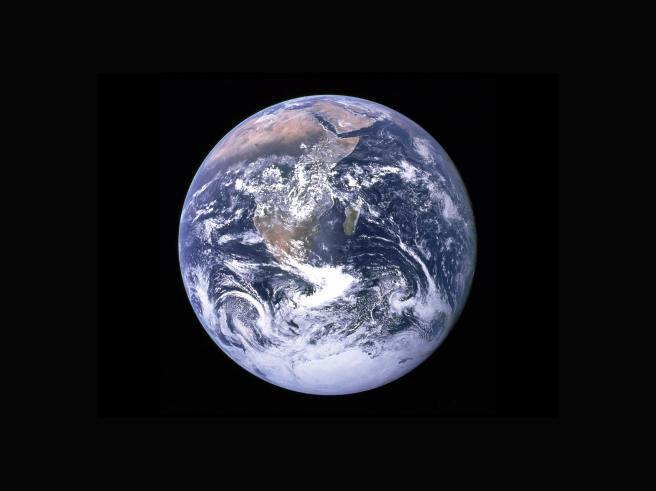
I reviewed the new biography and documentary about Stewart Brand. The best part of both is where they dive into the tension between Brand’s techno-utopianism and environmentalism (even though I tend to side with Brand that the two can and should co-exist).
You can read the whole thing at The Economist, here’s an excerpt:
Mr Brand’s technophilia helped shape Silicon Valley. But it drove a wedge between him and his ecologically minded friends. He had always been an outlier, enjoying Ayn Rand’s libertarian books at university. His fascination with humans settling in space—he financed the subject’s first major conference in 1974—widened the divide. In 2009 Mr Brand distanced himself from his fellow environmentalists, advocating for genetically modified organisms and nuclear power. As for the eco-warriors, he labelled them “irrational, anti-scientific and very harmful”. In response George Monbiot, an activist, suggested that Mr Brand was a spokesperson for the fossil-fuel industry. The criticism echoed Mr Kesey’s remark decades earlier: “Stewart recognises power. And cleaves to it.”
-
Notes on “The End of Invention”
Sam Bowman (and others) have made an excellent radio documentary on why the pace of scientific innovation has slowed, and what we can do to fix it. The whole thing is well worth listening to; these are some notes I’ve made on the bits I want to make sure I remember.
Ideas are becoming harder to find, research suggests; Nicholas Bloom’s 2020 paper on this found that “research productivity is declining sharply”. Moore’s Law proves to be a good example of this: “the number of researchers required to double chip density today is more than 18 times larger than the number required in the early 1970s”. Not good!
“Eroom’s Law” is a clever term for the problem plaguing drug development; Jack Scannell coined the term to refer to his finding that “the number of new drugs approved per billion US dollars spent on R&D has halved roughly every 9 years since 1950”. (“Eroom” is “Moore” backwards.) In the show, Scannell blames this in part on older drugs going off-patent and becoming generics: “You’ve got an ever improving back catalog of almost free medicine against which new medicines have to compete.”
Corporate research isn’t very good at developing truly revolutionary ideas, as those are often hard to monetise (the Internet is a good example). And so it’s concerning that government R&D, which can be quite good at funding those sorts of ideas, is falling as a share of overall R&D.
Scientific journals aren’t well-suited to encouraging revolutionary ideas, either. Margit Osterloh says that peer reviewers “agree more on scientific work which is garbage”, with more unorthodox (and revolutionary) ideas garnering more disagreement. As papers need multiple peer reviewers’ support to be published, that’s a problem. Osterloh thinks that introducing random selection could help solve the problem. She says that in the 18th Century, the University of Basel increased its reputation by randomly selecting professors. Today, some funding bodies (including New Zealand’s health research council and Switzerland’s national science foundation) are experimenting with similar methods. (As a big believer in the benefits of randomisation I find this very exciting!).
Again, the whole programme is worth listening to, you can find it here.
-
More good things (books, films, restaurants)
Books
The Planet Remade by Oliver Morton — I’ll write more on this soon, but it is a very good, wide-ranging and surprisingly poetic book.
Whole Earth: The Many Lives of Stewart Brand by John Markoff — will also have more on this soon, but if you’re interested in Brand (and you should be), this is worth reading.
From Satori to Silicon Valley by Theodore Roszak — a short and very readable overview of the links between Silicon Valley and the ’60s counterculture.
Various Batman graphic novels — Year One was the highlight for me, though The Dark Knight Returns and Hush are good too. Neither are as good as The Long Halloween, Arkham Asylum or The Killing Joke, though. I also read The Black Mirror and The Court of Owls, neither of which impressed me very much.
Films
That comic binge was brought on by anticipation for The Batman, which was much better than I expected. It’s probably my favourite Batman film, though The Dark Knight is arguably a better film in and of itself. (I also watched a few animated films, and would recommend both Under the Red Hood and Mask of the Phantasm if you liked The Batman.)
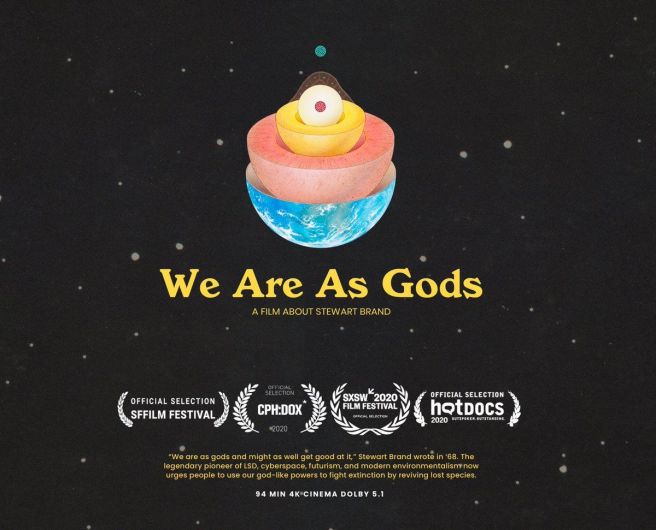
We Are As Gods is a very good documentary about Stewart Brand, and by extension about the ’60s, de-extinction, and techno-utopianism.
I also watched Dune for the fourth time, this time at home, which confirmed my suspicions that it derives a lot of its power from the big screen (particularly IMAX). Still good, though.
Restaurants
Bake Street has started doing biryani on Sundays, and if the first batch was anything to go by this is now one of London’s best meals. Everything else there is still fantastic too, obviously. I’m very excited that Feroz is opening a new outlet in the promising-looking Arcade Food Hall.
Towpath reopened the other week, and a sunny lunch of taramasalata, carrot-top fritters and peas was pretty much perfect.
A lunch at Dosa Express was particularly memorable for the snacks — pani puri, samosa chaat, dhai vada. The dosas were good too, particularly the crispy rava ones.
The Black Axe Mangal x St John meal kit was worth it just for the t-shirt; the excellent food was the icing on the cake.
Music
I’ve been listening to a lot of Acid Arab, Michael Giacchino’s The Batman soundtrack, Floating Points’ new single, and Music from Saharan Cellphones.
fabric at the Opera was a very clever and fun event, which I hope they do a lot more of. Rival Consoles and Frank Wiedemann stole the show.
-
In defence of astrology, tarot and divination
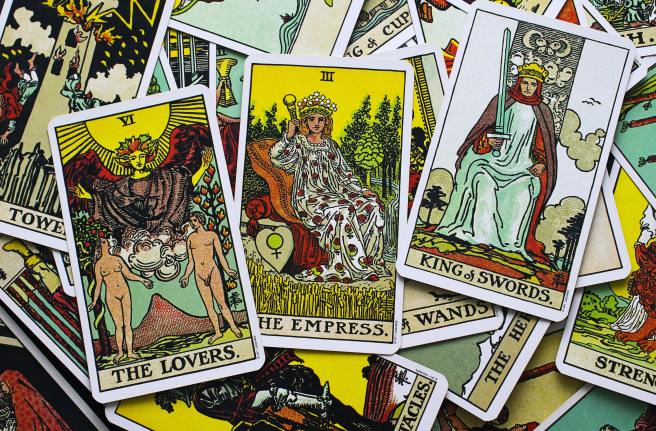
I’ve noticed a resurgence in the popularity of astrology over the last few years (particularly an increased prominence in bookshops) which I’ve judged quite harshly. I have found it depressing that so many people are willing to believe objectively false things, and that bookshops which are otherwise dedicated to knowledge are willing to promote nonsense.
But a couple of essays in LessWrong’s excellent “The Engines of Cognition” series have changed my view. I still don’t think astrology is “real”: I don’t think the placement of celestial bodies at your birth or otherwise affect your life. But I do think it and other “woo” beliefs can be useful.
Here’s Joseph Henrich in “The Secret Of Our Success” (via Scott Alexander), emphasis mine:
When hunting caribou, Naskapi foragers in Labrador, Canada, had to decide where to go. Common sense might lead one to go where one had success before or to where friends or neighbors recently spotted caribou. However, this situation is like [the Matching Pennies game]. The caribou are mismatchers and the hunters are matchers. That is, hunters want to match the locations of caribou while caribou want to mismatch the hunters, to avoid being shot and eaten. If a hunter shows any bias to return to previous spots, where he or others have seen caribou, then the caribou can benefit (survive better) by avoiding those locations (where they have previously seen humans). Thus, the best hunting strategy requires randomizing. Traditionally, Naskapi hunters decided where to go to hunt using divination and believed that the shoulder bones of caribou could point the way to success … these divination rituals may have provided a crude randomizing device that helped hunters avoid their own decision-making biases.
In “Steelmanning Divination”, Vaniver tries a form of divination for about a month. They consult random chapters of the I Ching, an ancient Chinese divination text. Here’s what happened, emphasis mine:
daily divination almost filled the same role as daily retrospectives or planning sessions; I was frequently thinking about all the different parts of my life on a regular interval, using a variety of random access to filter things down … having a prescribed ritual for what sort of cognition needs to be done encourages reflection and popping out of the obvious frame … It encouraged experimentation by partially decoupling one’s mood and one’s decisions … This approach has also served me well with other forms of divination I’ve since tried; a Tarot deck works by focusing your attention on a situation, and then randomly generating a frame … giving one access to parts of the space that they wouldn’t have considered otherwise
When it comes to introspection, it’s very easy to get stuck in classic thought patterns — unless we’re explicitly prompted to think about something in a new way. (Much of cognitive behavioural therapy is about trying to break out of classic, harmful thought patterns, in my experience.) Seen in this light, astrology and divination start to look like useful practices: they encourage you to think about things in a way you haven’t considered. And their lack of basis in reality is actually an advantage: because horoscopes and tarot readings really are random, each time you use them you’ll be forced to think about something in a new way.
I don’t think this ends up as a defence of the industry, or a defence of people that seriously believe in astrology and divination. As Vaniver shows, it is perfectly possible to find them useful without believing they offer “truth”. It continues to be bad that people believe in false things. But it does suggest that the practices aren’t irredeemable, and that you might even benefit from trying them.
-
Some recommended things from the last month
Book: Eating to Extinction by Dan Saladino. This is one of the best food books I’ve read. It’s both very poetic and information-dense: I suspect I am significantly more pro-capitalism than the author and I view the Green Revolution as an unambiguously good thing, but Saladino’s writing does make me mourn the diversity we’ve lost and want to help save it as best I can. (Happily, doing so involves buying delicious ingredients.)
Film: Dune in 1.43:1 IMAX. I’d already seen this twice in cinemas, including once in 1.9:1 IMAX. Watching it in full IMAX (at London’s Science Museum) was still breathtaking — the extra height makes a huge difference in conveying the scale of the world. Showings are few and far between but I highly recommend trying to find one.
Restaurant: Brat x Climpson’s Arch. Beautiful tomatoes and cod’s roe on toast; divine burnt cheesecake.
Play: A Number at the Old Vic. More plays should be this short and more actors should be this good.
-
Intelligence is about asking good questions
Neil Postman, emphasis mine.
In the development of intelligence nothing can be more “basic” than learning how to ask productive questions. Many years ago, in Teaching as a Subversive Activity, Charles Weingartner and I expressed our astonishment at the neglect shown in school toward this language art. Such neglect continues to astonish. The “back to the basics” philosophers rarely mention it, and practicing teachers usually do not find room for it in their curriculums. Thus I find it necessary to repeat two obvious facts about question-asking. The first is that all our knowledge results from questions, which is another way of saying that question-asking is our most important intellectual tool. I would go so far as to say that the answers we carry about in our heads are largely meaningless unless we know the questions which produced them. The second fact is that questions are language. To put it simply, a question is a sentence. Badly formed, it produces no knowledge and no understanding. Aptly formed, it leads to new facts, new perspectives, new ideas. As Francis Bacon put it more than 350 years ago, “There arises from a bad and unapt formation of words a wonderful obstruction to the mind.” In other words, stupidity. Let us, then, go “back to Bacon,” and make the study of the art of question-asking one of the central disciplines in language education.
Via Wikiquote, an underrated tool.
-
Subscribe
Subscribed
Already have a WordPress.com account? Log in now.
 Essayant